

Our Services < Laser Tattoo Removal
Book Appointment
What Is Laser Tattoo Removal?
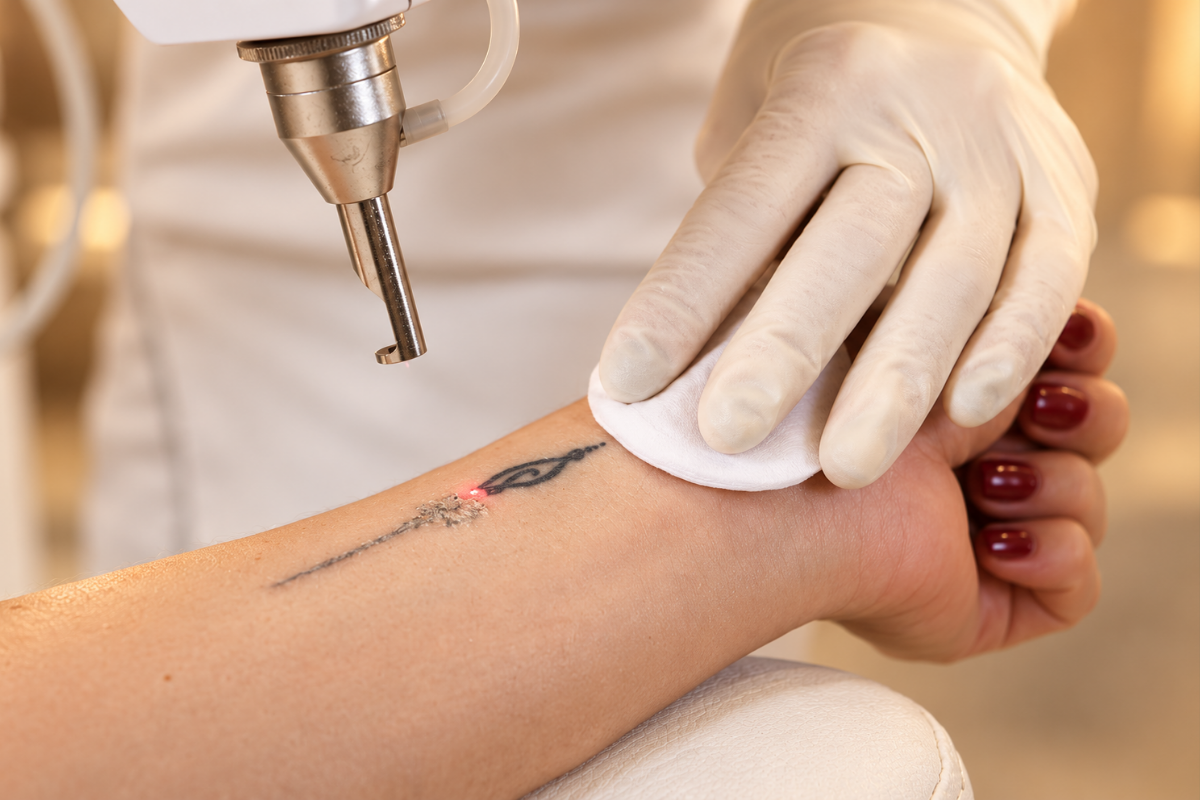
Laser tattoo removal is a non-surgical treatment used to gradually reduce the appearance of tattoo pigment.
The laser delivers short pulses of energy that target tattoo ink within the skin.
The pigment is broken into smaller particles, which the body gradually processes over time.
Tattoo removal is usually a course of treatments rather than a single procedure, and complete removal cannot be guaranteed.
Who May Consider Laser Tattoo Removal?
You may want to discuss treatment if you:
- No longer want a tattoo
- Want to significantly fade an existing tattoo
- Want to lighten a tattoo before a cover-up
- Have a tattoo that has already faded unevenly
- Have had previous tattoo-removal sessions and want to discuss further treatment
Before proceeding, the tattoo and surrounding skin should be assessed.
What Affects How a Tattoo Responds?
Not every tattoo responds to laser treatment in the same way.
Several factors can influence the treatment course.
Ink Colour
Different pigments absorb laser energy differently. Some colours may respond more readily than others.
Tattoo Depth
Professional and amateur tattoos may have pigment placed at different depths and densities.
Amount of Ink
Dense or heavily layered tattoos may require a different treatment course from lighter tattoos.
Age of the Tattoo
Older and newer tattoos can respond differently.
Skin Characteristics
Your skin and its response to laser energy are important considerations when planning treatment.
Previous Tattoo Treatments
Previous laser sessions, cover-ups or modifications should be discussed during consultation.
How Does Laser Tattoo Removal Work?
1. Tattoo & Skin Assessment
Your provider examines the size, colours, location and density of the tattoo, along with your skin.
Previous treatments and relevant medical history are also discussed.
2. Treatment Planning
The proposed laser approach is selected according to the tattoo and individual assessment.
You will also be given realistic information about the likely treatment course and limitations.
3. Laser Treatment
Laser energy is delivered to the tattoo pigment in controlled pulses.
The aim is to fragment targeted pigment while managing exposure to the surrounding skin.
4. Healing
The treated skin is allowed to recover between sessions.
5. Repeat Sessions
Additional treatments may be performed after an appropriate interval, depending on healing and the tattoo’s response.
What Can Laser Tattoo Removal Achieve?
Progressive Tattoo Fading
Tattoo pigment may gradually become less visible over a course of treatments.
Targeted Treatment
Laser energy is selected to target tattoo pigment while treatment parameters are planned according to the patient’s skin and tattoo.
Full or Partial Fading Goals
Some patients want substantial removal, while others only need enough fading to make a future cover-up easier.
Non-Surgical Approach
Laser treatment provides an option for addressing tattoo pigment without surgical excision.
The amount of fading varies, and some residual pigment or skin changes may remain.
What to Expect After Tattoo Removal
The treated area may temporarily develop:
- Redness
- Swelling
- Tenderness
- A warm or stinging sensation
- Temporary changes in the appearance of the treated skin
Other skin reactions are also possible.
Following the recommended aftercare is important to allow the area to heal between sessions.
Your provider will explain how to care for the treated skin and when to seek medical advice.
Why Do Tattoos Need Multiple Sessions?
A laser session does not remove all tattoo pigment immediately.
Treatment breaks down a portion of the targeted pigment, and the body then needs time to process it.
Further sessions target remaining pigment after the skin has adequately recovered.
The number of sessions varies considerably between tattoos, which is why it is not appropriate to promise a fixed number before assessment.
Tattoo Removal at Dr Al Naeem Medical Center
Every Tattoo Responds Differently
A small black tattoo and a large multi-coloured tattoo should not be expected to follow the same treatment course.
Before beginning laser tattoo removal at Dr Al Naeem Medical Center, we assess the tattoo and your skin and discuss what can realistically be expected.
Frequently asked questions
Thinking About Removing a Tattoo?
The first step is finding out how your tattoo is likely to respond.
Visit Dr Al Naeem Medical Center in Ras Al Khaimah for an assessment of your tattoo and skin and to discuss a realistic treatment plan.